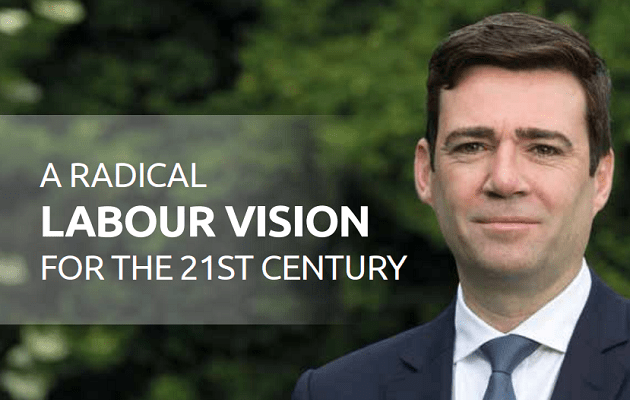
Trying to reorganise files on my computer today, I came across this letter I wrote to Andy Burnham when he was, briefly, the shadow Secretary of State for Education back in 2011. It’s a really interesting read with many of the points I made still relevant 15 years later. Though I am a bit harsh on nursery practitioners. Sorry about that. And Gordon Brown too. Sorry Gordon. I think I was going through one of the many pissed-off stages of my career.
Anyhow, here’s the letter if you fancy a read….
Dear Mr Burnham,
Despite one or two sensible ideas, I have yet to be convinced that Mr Gove and his department have got to grips with the current state of early/primary education in our country. I therefore turn to you and your colleagues in the Labour Party and ask you to stimulate debate surrounding certain areas of policy and those of general educational culture where I feel it is urgently needed. The views that follow are mine and mine only, but I know that many headteacher colleagues have some sympathy with the sentiment within them.
I have split the views into several sections as follows:-
- The Scientification of Standards
- The Supermarket Culture of Early Education
- How the 2001 Teaching Reforms have backfired.
- Why no-one wants to be a Headteacher
- Children’s Centres: Great Idea but Wasteful Implementation
- The Scientification of Standards
Quite simply, primary schools are better than they were twenty years ago. There has been a definite benefit to all schools in having national standards, shared goals and, above all, regulation through Ofsted. All good schools have aspirations to receive positive feedback from regulators, and pride in their results and overall performance. There are fewer and fewer schools that ignore this aspiration and more and more schools that can analyse available data to track pupils’ progress and intervene to correct underachievement. I am therefore not arguing that the use of data and its use by regulators to judge schools is a bad thing. On the contrary, it assists school leaders in their drive towards school improvement.
However, there is only so much that can be expected of a school. The majority of school cohorts will contain a range of children, and the complex factors that affect individual cohorts and schools during their journey mean that data will not behave in progressive ways, relentlessly inching up the scale. This does not mean that schools cannot aspire for continued year-on-year progress, but that government and regulators must be very careful about making generalised conclusions, and most importantly the language that is used. What was outstanding in 1995 seems now to be satisfactory in 2011. This is simply not fair on school leaders as it depresses what are sustained improvements, converting them instead to relative failures, in particular penalising those serving areas of significant deprivation.
As I will with each of these areas, I will try to give a real example. When I took over at my current school in 2006, I admitted several children from neighbouring schools all with significant learning difficulties or mental health problems, or both. The mission of the school is an all-inclusive one, and I had no hesitation in welcoming them into the school. (More pragmatically, I also needed to increase pupil numbers). Because they came to us during their Junior years, the government data was not able to measure the added value, and their raw performance was somewhat short of the Level 4 standard expected at the end of Key Stage 2. But I was more than satisfied that these children had received a good education at the school and left as well-behaved, respectful, well-balanced children ready for the high school. The schools also has a unit for pupils with severe and complex learning difficulties, further depressing performance data, and this was doubly compounded by three high-performing girls leaving the school during the Junior years, two as a direct result of the mental health issues present in the cohort. Sadly, this cohort’s performance will always be deemed as poor and be used for three-year trend data until 2012/2013.
Simple attainment data alone cannot in itself be used to judge a school’s quality, aspiration and curriculum. Whilst the use of performance data and external regulation are crucial in driving up standards, the data has to factor in more of the school’s work. Similarly, politicians must recognise that you cannot keep expecting results to go up at the same time as society’s problems multiplying – this is unreasonable. Children are presenting more, not less, mental health difficulties, and politicians have to articulate this clearly.
Bizarrely, it seems as I am now also being blamed for the level of pupil attendance at school, with our average being a lower than expected 93%. ‘It’s hard to see you being judged as better than a satisfactory school with that figure’, I have been told by the local authority. This is crazy. I would actually be happy to visit the 7% myself to interrupt their lives and drag the offending pupil to school, but I certainly wouldn’t want my staff doing this. It is no surprise that the same 7% will contain households which are criminal, dangerous, vacant or riddled with dysfunction. We need help here, not targets, and this is a classic area where the science of data analysis has stomped crudely over the body of common sense.
Possible Solutions
- ‘Upgrade’ the judgements made by Ofsted on curriculum quality, standards of care and guidance, and quality of teaching and learning, so that they are merged with the current Literacy and Numeracy results to give a greater and more balanced picture of a school’s quality, including in league tables. This data is available already, so there would be no further financial outlay, would not affect the drive for greater standards in Literacy and Numeracy, but would be a much fairer reflection on the long-term journey made by a school.
- Support schools properly with pupil attendance. It’s enough for leaders and teachers to have lessons ready and a vibrant curriculum awaiting pupils – spare us the duties of rounding children up each morning as well. If getting that extra 7% to school each day (this of course ignores genuine illness – children do actually get ill, brought up as they are on the additives-on-toast diet), is so important, then invest in this and ensure schools employ family support workers and community police officers to coerce the offenders into school.
- The Supermarket Culture of Early Education
There is a strange paradox within education at the moment. We are told relentlessly by academics, politicians, regulators and parents that the experience of children under 5 is vital to their future educational aspirations and performance. If children start school with a poor grasp of language, communication and social norms, it is incredibly difficult to bridge the gap to children from backgrounds where parents have given their children a language-rich start to life. I have yet to hear any argument contradicting this train of thought.
So why is it that we surround these young children with some of the most inexperienced, undertrained ‘practitioners’ that exist in education? Worse still, in the areas of most deprivation, where some children aged two years old have hardly heard any examples of a correctly spoken sentence, the prevailing culture in the nurseries, children’s centres and crèches is that of a supermarket.
‘Practitioners’ chat over the children in the same way cashiers gossip with each other over the heads of their customers. They refer to shifts, breaks and clocking in and out. Instead of stacking shelves and stocktaking, which supermarket employees seem to enjoy doing to avoid serving at the till, ‘practitioners’ welcome the cleaning of the kitchen, the changing of the nappies, cutting of the fruit and sweeping of the floor, anything but converse with the little children they are educating.
Worse still, the hysteria of safeguarding we have condoned in response to a few wierdos that have found jobs in nurseries (how the hell did they get employed?), has empowered ‘practitioners’ to default to this as the primary purpose for carrying out their duties. ‘Are we in numbers?’ is the constant refrain, as well as, ‘Have you risk assessed this?’ and ‘I can’t do this because I haven’t done the safeguarding training.’ So, the hell with teaching these children to talk, ask questions, develop relationships with their peers – I’m far too busy checking whether Vicky is going off for her break at 11 or 11.15 because it’ll affect our numbers.
Tragically, I have had to investigate two separate ‘safeguarding incidents’ over the past twelve months in my own Children’s Centre, and both would have been comfortably avoided had the focus been on the child and not the systems. Sadly, in each case, the ‘practitioners’ defence was that they had done nothing wrong (apart from not pay a blind bit of notice to the children in their care). They had followed the correct procedures (just) and therefore it was management’s fault.
Within this ‘supermarket’, enter the martyr, a present day saint, namely the Nursery Manager, who tries to cope with dealing with all the ‘practitioners’, the fees and dealings with parents, as well as organising the curriculum and quality of care. On a salary of barely £21,000, this is grossly unfair. Would we leave the education and care of 50 sixth-form students in the hands of a non-teacher paid less than a newly-qualified teacher who also has to administer and collect their fees
Solutions
- We must pay a teacher level salary to someone who is in charge of the education of all children from 0-5. Either that, or not bother at all, and invest the money into early parenting. It is counter-productive to usher a mother to work but leave her children in the hands of inexperienced, unmotivated youngsters. If schools are to pick up the management of nurseries, as is the case with many Children’s Centres, then allow them to use budgets to fund such payments. This then frees the Nursery Manager to deal with the business side of running a Nursery. This must be prioritised to those areas where parenting is absent to the point of neglect. I will come back to this in the Children’s Centre section.
- Raise the profile of this sector of education. As it stands, an underperforming girl at school is told to think about hairdressing, serving coffees, or looking after little children. We need graduates talking about looking after little children, and not Early Years Professional Status graduates, or NVQ graduates. It is interesting that such qualifications have yet to be scrutinised quite so scientifically as primary schools. So politicians need to talk this up. And quick.
- Ban the phrase, ‘Early Years Practitioner.’
3. How the 2001 Teaching Reforms have backfired.
I’m afraid this reflects rather badly on the Blair Government, but whilst the reforms of 2001 were enacted with the best of motives, they have become a sword of Damacles for school leaders. In its laudable efforts to give teachers greater status and professional rights and protection, it has allowed a more non-vocational, rather selfish trait to appear in the system. This has not yet become a major issue due to the plethora of applicants to teaching posts, but it is worth exploring as I believe it is quite worrying and may be a factor in continuing concerns over the nature of our curriculum.
The first problem is what is known as PPA time (planning, preparation and assessment). In the past, teachers used to finish lessons at around 3.30pm and spend time until 5pm marking books, preparing the next day’s lessons and talking to colleagues. Now, PPA time has allowed teachers to believe that this is no longer the issue and time during the school day has to be found to assist with these duties – minimum 10%. Sadly, a sizeable minority of teachers demand this even in the most farcical circumstances.
Consider this. A teacher is given two hours every Wednesday afternoon to carry our PPA duties fitting neatly into the timetable of the school. The class is covered by an experienced teacher or sports coach for example. But the teacher, backed by his/her union, points out this is only 9.4% of their statutory and rightful 10% of all curriculum time. So the headteacher has to interrupt the morning lessons to allow the teacher to leave class twenty minutes before the end of the morning, with another teacher ‘finishing’ the lessons off.
This bizarre example is indicative of a change in the culture of the teaching body to a ‘rights first, responsibilities second’ framework. Yes, this could be a change in society overall, but this doesn’t make it right, and politicians should take time to voice this concern.
There is also increasingly anecdotal evidence that teachers employed post 2001 are far less likely to ‘go the extra mile’ for their school, in my view as a direct result of the contractual changes. Whereas teachers would always do what was necessary to help their pupils in the past e.g. run clubs, organise residential visits, give up lunchtimes to support puils falling behind, now they have been told they don’t have to as it is not contractual. The Health and Safety, and Safeguarding obsessions have further deterred teachers from veering away from their contracted duties.
The famous 25 administrative tasks delegated to other staff members under these contractual changes have also been interpreted by some over-zealously. I have heard of a teacher who will watch the class’s support assistant complete the register because she was told she wasn’t to confuse her day by adding such an onerous administrative task. What nonsense. Doing the register is a great way for teachers to say good morning to his/her pupils and often in a foreign language – it places no extra burden on anyone.
The ‘go the extra mile’ culture is turning, but only as teachers become aware how fortunate they are to have a permanent job in the current climate. Teaching is a vocation, with its roots in volunteerism and self-sacrifice for the common good. In this respect it has more in common with the culture of amateurism from a different age than the professional managers and consultants of the post-millennium era.
Solutions
- It clearly would be impractical to ‘undo’ the reforms of the 1990s. Heads will have to work within these boundaries. Politicians must however acknowledge that these reforms have been counter-productive and stress to the public that teaching is a vocation, where no amount of PPA time can adequately balance a teacher’s workload and commitment. Indeed, the best teachers use their PPA time to work with children, a rather old-fashioned and quaint idea.
- Teacher training institutions have to highlight the vocation and commitment associated with a teaching career. Long term-time hours go with the job and new teachers need to know that this is normal.
- Scrap PPA time and allow Heads to organise it to the benefit of the children in their school.
- Merge the Main Teacher Pay Scale and the Upper Pay Scale. It is nigh on impossible for heads to equate excellence with pay, and only causes upset in the staffroom. Allow a group of Headteachers to advise the Government on teachers’ pay progression.
4. Why no-one wants to be a Headteacher.
The predicted problem involving Headteacher recruitment is much discussed and debated, but I believe there is great complacency at most levels as to the key reason why this debate needs urgent attention.
The world of education in Britain is awash with consultants, advisors and improvement partners who tend to steer clear of the difficult issues (see below), instead choosing to see school improvement as a sort of recipe: add some leadership training, sprinkle some intervention programmes, drizzle a little data analysis, and voila, a high-performing educational institution rises out of the steam.
I have been a Head for over ten years, and very rarely have I had any practical advice. Instead, it’s been coated in management-speak. Indeed, some advisors have never actually been Headteachers, but are statisticians, children in suits, scientists on a mission. And all paid hefty sums of taxpayers’ money.
The bulk of the advisor’s work now is taken up with analysing and interpreting data taken from the work of the Fisher Family Trust. Looking at their website, it seems they have been contracted by the Government to produce this data to assist Local Authorities set curricular targets for schools. The complexity of the data is such that it takes up the bulk of any advisor’s training, to the extent that it is not actually necessary for that person to have been a Headteacher. This data is then used by the advisor to challenge schools.
But the Headteacher is already being challenged. These challenges are not easily measured and require advisors to possess great intelligence, subtlety and experience when discussing them with Heads. Let us look at some of these issues before drawing conclusions.
Firstly, the job of managing several layers of staff. This is a full-time job in itself. All are entitled to performance management, though this involves a post-2003 emphasis on accountability, often linked to pay. The judgements on threshold and upper pay spine assessments are now the duty of the Headteacher. However, the micro-politics of staff dynamics are far more complex than a simple input-output model, and definitive decisions on performance are often divisive and ripe for union challenge. At the same time, the expansion of support staff has created further work for Heads, and even apparently minor issues e.g. the move to place schools in charge of their kitchens and staff, can have wider consequences. A salad bar sits in my Hall. I have no idea what to do with it, only that it is tied up with a Government target on child health.
Secondly, and related to this, the 2001 teacher contractual reforms have placed demands on the Headteacher to ensure teachers are treated ‘well’. This has had the unfortunate effect of strengthening the perception that teaching is a sequence of actions which will automatically lead to the results that the advisors/statisticians have predicted. I administrate the actions, have my contractual break, administer some more actions, have my contractual 10% preparation time, and my job is done. The reality, though, is that teaching is unpredictable, dynamic and should not be bound by frameworks. Only if a Headteacher can overcome the ‘management of staff’ issue (see above) can he/she have the confidence to take on this falsely constructed culture.
Thirdly, the nature of children in Modern Britain. A sizeable minority, and in some schools, a majority of children, are emotionally and mentally fragile. If this doesn’t bother you as a Headteacher, then you are not a Headteacher but an administrator. For the Headteachers where this issue invades their thoughts and dreams, it takes up energy and time to create an environment where the children’s needs can be met. With its emphasis on inclusion, this can jar against the demands to produce results, to flog them against Literacy and Numeracy targets, to see a concrete set of data which can measure success. Well-trained advisors and improvement partners should be working with Headteachers in assisting them meet this challenge. Sadly, my experience tells me that they do not.
Fourthly, the recent expansion of the Extended Schools’ agenda. My experience tells me that some advisors and consultants don’t actually know what this means yet. They certainly do not see the extra work for Headteachers that it brings. At my school, the next Ofsted inspection will potentially see a Children’s Centre, its nursery, a Breakfast Club and an After-School Club all inspected for their quality of education and care, their policies and procedures, and their contribution to the children’s happiness. It’s like having three mini-schools in addition to the big school, and is certainly something most current inspectors and advisors will never have done themselves. Quite understandably, they therefore are unable to offer any practical support.
Fifthly, the emphasis placed on parental choice. Parents, and quite rightly in my opinion, have much greater say in how schools are run. They are encouraged to offer opinions and, unlike, say, a doctor’s surgery, a parent expects to speak to the Headteacher at the drop of a hat. After all, what is more important than the welfare and life chances of one’s young child? This can place emotional demands on a Headteacher, as well as that of valuable time. But the teaching profession issues no guidelines on where the line should be drawn, and I personally find myself drained by the immediacy of this most important line of accountability. Advisory support in this field would be so welcome, but is conveniently avoided.
And finally, the skills needed to shape a curriculum for the pupils which has a multiplicity of pressure groups all jockeying for a plum position in the timetable. At present I am trying to expand the provision of Modern Foreign Languages which became an entitlement for all pupils in 2010 (although now politicians aren’t that sure), to revise the frameworks for Literacy and Numeracy (or create new ones), to introduce the revised Early Years Foundation Stage, to develop Wider Opportunities for instrumental musical tuition, to ensure 10% of the curriculum is dedicated to RE, to find four hours of week for all pupils dedicated to Physical Exercise, to ensure pupils’ emotional learning is being prioritised, to give pupils more lessons using computers, and to develop pupils’ awareness of community cohesion. As these are being introduced, a new review proposes merging some of these ideas into six areas of learning, which could lead to further timetable revisions and nervous teachers. It is now commonplace to hear teachers comment,’ We’ve got to do this’ and ‘You have to do this now’, a passive culture reinforced by advisors who act as mouthpieces of the government instead of partners in a school’s move to owning its curriculum.
There are many other increasing demands on Headteachers which go untouched by improvement partners. Increased financial accountability is one example, another being the difficulties in recruiting governors.
My conclusion is simple. The Headteacher has too much responsibility for too many things and is expected to deal successfully with them in too short a timescale. On the other hand, the plethora of advisors and inspectors are unwilling to give enough importance to these issues, preferring to default to the statistics from the Fisher Family Trust. This imbalance leads to a feeling of despair on the part of the Headteacher whose frustration and exhaustion is seen by other members of staff in the school. Hence the shortage of Headteachers.
There will be variances nationwide. Some Local Authorities will get the balance right. But such is the pace of change, there will be very few consultants, improvement partners, advisors, or, indeed, inspectors out there with any meaningful experience as a modern Headteacher. And that, surely, is wrong.
Solutions
- The job has to be seen as more attractive, so that it’s far more appealing than becoming an advisor or consultant. Pay and conditions of service need looking at.
- Whilst accountability is crucial for schools, too much is tied up with the Headteacher, creating serious pressure for the incumbent at times. Headteachers should be rewarded when there is clear direction in a school, where there is a sense of shared purpose and journey to a better place, even when the school data is not so favourable. This is especially true of Heads working in challenging schools serving communities where parenting is largely absent.
- Politicians need to stay out of school leadership, and commit their energy in identifying quality leaders to run our schools, and then backing them.
- Please avoid trying to apply private sector models to a vocation rooted profession – it doesn’t work. It is nigh on impossible to place a crude input-output model on the management of staff, and has led to a decade of incredibly time-consuming and stressful grievance procedures across the country (I have two running just directed to me at the moment)
5. Children’s Centre: Great Idea but Wasteful Implementation.
Many people have written about the tragedy of Gordon Brown, largely in personal terms, but for me the whole Sure Start story acts as a metaphor for Brown’s New Labour rise and fall. In this I mean that whilst its rationale is radical and full of common sense (it is a fantastic idea, and so in tune with how society cracked during the destructive Thatcher years), its implementation was inefficient and arbitrary.
The introduction of Children’s Centres was a bold move, creating an irreversible network of buildings right across the country, especially in communities that had most suffered in the 80s and 90s. They were well resourced, well situated and welcoming buildings, staffed by a legion of well-meaning social, health and education operatives.
There was just one problem. In keeping with what we now know to be Mr Brown’s desire to control just about any policy he helped put together, the central control and regulation of these Centres was stifling. They had to be staffed with obedient council employees whose work remit was notable for the amount of things that one couldn’t do, rather than those that one could. Conditions of grant were clearly defined but largely unenforceable leading to financial controls which were noticeably absent. Opportunistic businessmen suddenly developed an interest in play equipment and wheeled toys, heuristic baskets and an awful lot of cupboards. Managers, many of them with no experience of early education, were given control of these budgets with messages fed through from councils such as, ‘If you don’t spend it by March, it’ll go…’
The central control was exacted through data returns. The amount of registrations, active registrations and activity occupancy was of paramount importance. Staff divided their time obediently, running services for clients and then rushing back to get all the data on to the computer. The centres sometimes resembled call centres, with computers and telephones beeping frantically in an effort to collect figures to pass to Whitehall.
Governance was arbitrary with some LAs devolving Governance to wildly varying degrees. In Liverpool, the LA devolved only the parts that were messy, like staffing and well, more staffing, but without any power for the Governing authority to restructure or provide a local solution. Where Centres were connected to schools, Headteachers had little or no idea (or time) of how to properly manage the provision.
Priorities over safeguarding and protocols led to a climate of fear, where every or any person coming into the centre was beaten round the head with a thousand forms to fill in. Unsurprisingly, the really vulnerable people to whom the Centre was meant to be a safe haven rarely set foot in the place, and instead caring and intelligent parents quite happily accepted the free range of baby massage, stay and play, and musical minis groups set up each week.
I have already talked about the childcare earlier, but this was an added burden on school leaders, especially the bureaucratic minefield of fees, tax credits, free places and business plans.
Most Centres, even the one attached to our school, have done a lot of good work and I don’t want to underestimate this, but at an exorbitant cost to the taxpayer. Now, with the change of Government, there is an appraoching void as local authorities have less and less resources to manage them effectively, whilst schools have not been given the legal or structural basis to merge them effectively into an educational and community function.
For me, the real tragedy is that it could have been so different. Thousands of schools, especially those set up by faith groups or trusts, many over a hundred years ago, have been an agent of social harmony and mobility for years. The services offered by Children’s Centre are not that new. Mr Brown’s vision was to create the infrastructure and rightly so. Yet he and his political allies, in my view, did not make the most of the thousands of schools already predisposed to working with vulnerable families, improving early health and education, committed to early intervention, but instead created a cornucopia of new public sector jobs which are now quite rightly being questioned as to their sustainability.
Solutions
- There is only one, which is to all take a deep breath and audit the current running of Children’s Centres. A politically motivated cull of them would be nonsensical, but their value needs to be questioned. Most importantly, their management and governance needs to be looked at as a matter of urgently if they are to truly narrow the gap in our most challenging communities. I urge the Labour Party to lead this review and not to lose sight of the bold vision which underpinned the whole enterprise.
Many thanks for taking the trouble to read through the points I make,
Yours sincerely,
Jeremy Barnes
Headteacher


Did you ever receive a response to this detailed, well argued and accurate summary of the current state of Primary Education in the UK and particularly the unprecedented pressure being placed on Headteachers?
LikeLike
Did you ever receive a response to this detailed, well argued and accurate summary of the still current state of Primary Education in the UK and particularly the unprecedented pressure being placed on Headteachers?
LikeLike