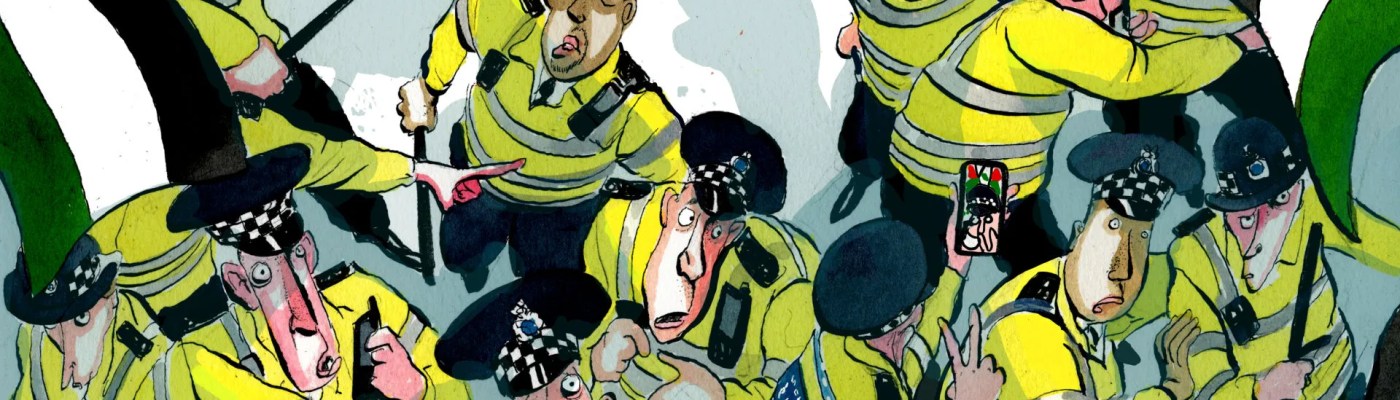
The image of the six police officers converging on the suburban house is quite unnerving. All that for complaining about your school in a WhatsApp group? Really? No wonder the Times chose to lead on it, though the fact the parent happens to be an employee probably oiled the wheels of the story.
What we don’t know is the other side to the same story. We have not heard from the school’s headteacher, nor the governors, nor other parents, maybe even those in the same WhatsApp group. And maybe in time, it will come out.
However, what I really want to accentuate here is not this particular event, where we can only speculate and hypothesise, but the hundreds, perhaps thousands of other ones that lead to huge distress to school leaders, and often a residual anger towards a complaints system that has become a free-for-all, amplified by social media.
I know because I’ve experienced it. About ten years ago, a campaign of abuse against one particular teacher in my school was then directed towards me; I backed him in the face of the total lack of substantiation to the complaint. The more we dug in, the more the parents threatened. It was awful – that’s the only way to describe it. In the end, an independent investigation found both the teacher innocent of any wrongdoing, and my response as a leader entirely proportionate, but it took six months to get to that stage. Six months of worry and anger.
What struck me at the time was the abject lack of support from anywhere else, bar consoling words. Now, I was grateful for the consoling words, particularly from governors, but what I really wanted was to seek redress for this perceived injustice on my part. At one stage, I really thought the teacher was going to resign which would have been disastrous. The local authority couldn’t help, nor could the Archdiocese (though they did eventually appoint the person to do the independent investigation) and officers from human resources were only really there to ensure the process was followed properly. I really did consider calling the police at one stage, because I could not see another route to fight back against the malevolence.
Ten years on, and these types of incidents have multiplied, particularly since the pandemic. The Archdiocese told me that the annual increase was around 500% and they simply couldn’t keep up, meaning it almost impossible for any independent investigations to be commissioned. I have supported headteachers new to their careers who are battling on whilst under intense pressure from parents, some who are accompanied by a legal representative demanding answers. For these new heads, an intense training session, or series of sessions, in how to understand the law within the context of complaints procedures, is now considered a top priority. Not the joy of reading, nor the history curriculum, not swimming gala or prayer and liturgy with Year 1. No, that needs to be relegated behind a day studying sub-section 3.8 of the 2010 Equalities Act.
How have we got here? What kind of society acts with such a lack of solidarity and compassion? As His Majesty’s Chief Inspector, Sir Martyn Oliver, remarked pithily the other day, ‘Join the PTA, not the pile-on,’ and he’s right. The trouble is, the organisation he leads – Ofsted – is complicit in maintaining a culture where the parent knows best, its whole rationale for inspection based on the importance of holding a school accountable to parents.
Of course, the counter-argument is that the scrutiny from parents, supported by the law, by Ofsted and our culture of rights, assists schools to be safe, obedient and well-run. It is good for transparency and leads to a vastly improved education for pupils. The problem with this is that it tends to assume that without this level of probity, teachers would immediately all pick up a cup of coffee, put their feet up and let the children watch videos all day. Which is nonsense of course. Indeed, we have recent evidence of a time when all accountability disappeared overnight, and it was exactly five years ago. Schools rallied and were invigorated by the freedom to innovate and take on more decision-making, becoming central to the pandemic front-line support. The point is made well by Jonny Uttley in this week’s Schools Week https://schoolsweek.co.uk/build-back-better-was-a-broken-promise-to-our-children/
Another point to note is that of over-correction. This view, tracked through the history of civilisation, suggests that improvements to society are often accompanied by an over-correction. I fully accept that greater accountability was needed in schools, particularly in matters related to safeguarding. But the overreach has been particularly vertiginous in this case and needs arresting.
And before people draw any conclusions that I am anti-parent, I should also say that a majority of parents are fantastic and get the partnership with school spot-on. Without them, we could not have got have created the fabulous community that we have at our own school.
But, in my opinion, there should be no doubt that school leaders are in charge of their school, just as there should be no doubt that parents are in charge of their children. This needs reinforcing.
I cannot comment on the case that hit the front of the Times, but I can comment on many others I have either been central to, or on the periphery of. It has gone way too far and it does appear to be all rights and very little responsibility.
And here’s the danger. If it goes on any longer, there will be no one left in school to complain to.
 Bald Headteacher
There was a time – not too many years ago – when Headteachers, teachers and school staff were held in very high esteem. Generally they were trusted, respected and often admired. Sadly, in my opinion, it was Margaret Thatcher’s government that changed all that! She talked about there being too many teachers who were not up to their important task and more damagingly she promised to “remove the dead wood from the profession
LikeLike
There was a time – not too many years ago – when Headteachers, teachers and school staff were held in very high esteem. Generally they were trusted, respected and often admired. Sadly, in my opinion, it was Margaret Thatcher’s government that changed all of that! Thatcher and her minions talked about there being too many teachers in our schools who were simply not up to the important task of educating our young people. More damagingly, she promised to “remove the dead wood from the profession” suggesting that many teachers were failing their pupils.
This, in my opinion, caused journalists, parents, carers and even pupils and students to inappropriately criticise, question and challenge our school based professionals. This, often ill-founded criticism, in turn caused thousands of disaffected teachers to leave the profession prematurely and the resultant recruitment problem has not been remedied to this day!
Teaching our young people is an incredibly complex, sensitive and demanding task. I have seen little in the last 30 years which has made this task any easier!
LikeLike